Traditional economic discussions often focus on growth rates and profit margins, overlooking the deeper values that sustain societies over generations. By weaving ethics directly into our economic framework, we open doors to transformative advantages that ripple through every layer of community life.
From fostering trust to safeguarding the environment, an ethical economy transcends mere compliance, embedding moral purpose at its core.
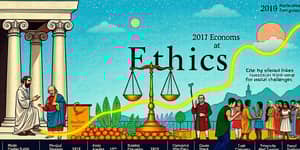
The roots of an ethical economic model trace back to Aristotle’s concept of justice and Adam Smith’s balance of self-interest and collective good. Modern thinkers challenge the narrow "homo economicus" paradigm, advocating for empathy, solidarity, and social values in all transactions. By merging moral philosophy with financial analysis, this approach recognizes that true prosperity encompasses both material wealth and human flourishing.
One of the most profound unseen benefits is enhanced social trust. When economic policies prioritize fairness, honesty, and community welfare, legal disputes and enforcement costs shrink. People feel valued, forging stronger bonds and reducing friction in daily transactions.
Ethical models also drive down inequality through targeted measures—progressive taxation, universal basic services, and balanced wage structures. This reduction of income and opportunity disparities boosts morale and strengthens the social fabric.
Ethical economies are inherently more stable. By sharing risks and aligning stakeholder interests, they cushion the impact of financial downturns. The 2008 global crisis, rooted in unethical lending and opaque derivatives, highlighted the dangers of short-term profiteering. In contrast, ethical models emphasize sustainable growth rather than immediate profits, leading to steadier progress.
Long-term prosperity depends on avoiding boom-bust cycles. When businesses and governments commit to responsible lending, equitable resource allocation, and transparent governance, they build trust and ensure consistent investment.
Integrating ethics into economics aligns perfectly with the United Nations’ Sustainable Development Goals. By assigning real value to environmental resources and accounting for externalities like pollution, ethical models promote cleaner technologies and resource stewardship.
Consider the transition to a zero-carbon energy system over the next three decades—a move deemed "paramount" by climate scientists. Although initial costs may appear high, factoring in health savings, ecosystem preservation, and disaster avoidance reveals clear long-term gains.
Viewing health as a public good shifts policy priorities from purely medical interventions to broader social determinants. Ethical economic models champion access to healthcare and essential services—housing, nutrition, and safety—recognizing their outsized impact on community health.
Cost-effectiveness analyses (CEAs) that incorporate equity measures often find that non-health investments deliver greater health improvements per dollar spent. For instance, funding homelessness prevention can reduce emergency room strain and yield a positive return when evaluated holistically.
Ethical frameworks expand the policy toolkit. Traditional models might dismiss unconventional interventions, but normative approaches consider community values and potential social dividends. Supervised injection facilities, once controversial, now show cost-effectiveness and harm reduction benefits backed by rigorous modeling.
Moreover, institutions grounded in ethics earn higher legitimacy. Citizens are more likely to comply with regulations and engage in collective endeavors when they trust that policies serve the common good.
No model is without obstacles. Balancing efficiency with equity can create tension—Pareto-optimal outcomes may still harbor extreme inequality. Cultural variations also influence ethical norms, complicating global implementation.
Yet open dialogue, stakeholder engagement, and adaptive governance models help reconcile conflicting priorities. As Amartya Sen’s capability approach suggests, broadening our definition of well-being is key to overcoming these debates.
Embedding ethics into policy requires robust assessment tools. Traditional CEAs must evolve to include social trust indices, well-being metrics, and environmental impact scores. Transparent reporting and multi-metric dashboards can guide decision-makers toward balanced outcomes.
By fusing ethics with economics, we unlock a spectrum of benefits that conventional models often miss. From stronger social cohesion to environmental stewardship and health equity, the unseen advantages of this approach promise a resilient, inclusive future.
As we confront global challenges—climate change, inequality, and health crises—an ethical economic model offers a roadmap toward sustainable prosperity. Embracing this vision requires courage, collaboration, and a shared commitment to the common good.
References