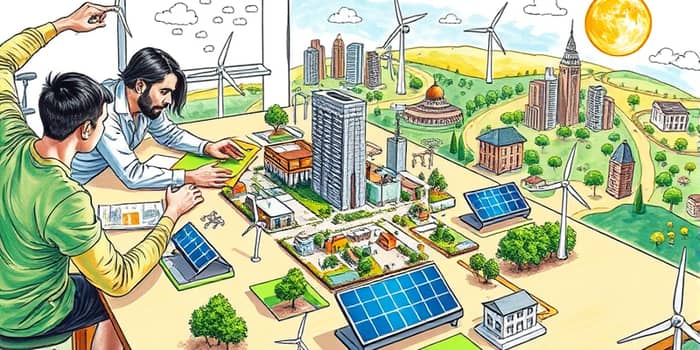
In an age of rapid change and heightened environmental awareness, design has emerged as a pivotal force shaping economic trajectories and societal well-being. From shaping global trade in creative services to pioneering sustainable infrastructure, design is not just an aesthetic pursuit but a strategic asset in building resilient, prosperous communities. This article examines how design drives growth, reduces costs, and enhances quality of life, offering insights into current trends, challenges, and the visionary concept of a "Designer Economy."
Across the globe, the creative and design sectors have demonstrated remarkable growth rates, often outpacing national averages. In the United Kingdom, the design industry contributes an impressive £97.4 billion in Gross Value Added (GVA), growing at nearly double the pace of the wider economy. In the United States, the interior design sector alone generated $96.3 billion in economic impact in 2016, supporting over 522,400 jobs. Meanwhile, design services in the US saw an 8.5% increase in 2022, on the heels of a 13.6% rise in 2021.
Globally, the creative economy is a trade powerhouse: creative services exports reached $1.4 trillion in 2022, a 29% increase since 2017, while creative goods exports climbed to $713 billion, up 19%. Arts and cultural industries have grown at twice the rate of the wider US economy, signaling strong demand for design-driven offerings. At the heart of a thriving economy lies economic productivity and competitive advantage, both of which design fosters through innovative solutions and market differentiation.
Sustainability is no longer a niche concern—it is a core business strategy delivering measurable returns. Studies show that green design can reduce total building costs by 2%, with net lifecycle savings exceeding $23,000 over 25 years. Renovations that embrace eco-friendly principles achieve up to a 46.8% reduction in energy use and 25% lower utility bills, translating directly into improved bottom lines. Businesses adopting energy-saving measures often lower their utility costs by 20–30% on average.
Beyond financial gains, green buildings foster healthier, more productive environments. Natural daylight, improved air quality, and biophilic elements have been linked to reduced absenteeism and higher employee morale. These factors underscore how design extends value creation beyond cost savings to deliver health, well-being, and resilience for occupants and communities alike.
Innovation is reshaping every corner of the design sector. Computer systems design and fine arts education are on the rise, while adaptive reuse and aging-in-place solutions address demographic shifts and resource constraints. However, designers face headwinds such as high interest rates, tariff uncertainties, material price volatility, and labor shortages. Agility, cost-consciousness, and forward-looking strategies are essential to navigate these challenges.
Embracing data-driven decision making and impact tracking can transform these challenges into opportunities. By prioritizing resource efficiency and waste reduction, firms can improve margins and strengthen stakeholder trust. Equipping design teams with digital tools, such as Building Information Modeling (BIM) and life cycle assessment software, further enhances precision and accountability.
The emerging concept of a "Designer Economy" advocates for integrating design principles into economic policy and industrial strategies. By leveraging open, standardized data, policymakers and designers can collaboratively model scenarios for decarbonization, adaptive infrastructure, and resilience to systemic shocks. Such foresight allows economies to anticipate resource constraints and optimize outcomes.
Technological advancements also promise to reshape the sector. Generative AI and advanced design tools could contribute an estimated $2.6–$4.4 trillion annually in productivity gains across industries. Harnessing these innovations responsibly will require robust governance frameworks and ethical guidelines.
Realizing this vision depends on developing robust impact metrics and workforce skill development. Standardized measurement frameworks will enable consistent evaluation of social and environmental outcomes. Simultaneously, investing in education and professional training will equip designers with the expertise to lead sustainable transformations.
Ultimately, reimagining resources through design offers a pathway to resilient, inclusive growth. By aligning creativity with strategy, organizations and governments can unlock the transformative potential of design, ensuring a thriving economy that respects planetary limits and uplifts communities worldwide.
References