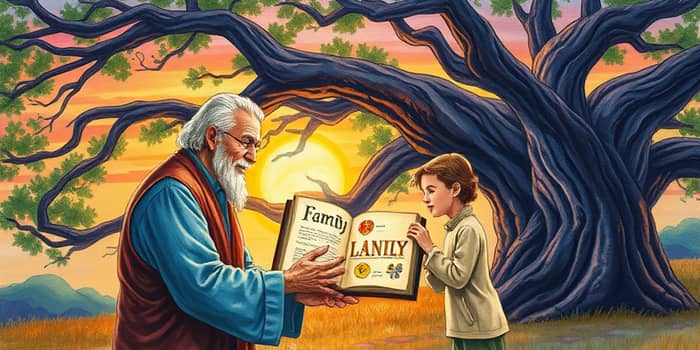
In a world often focused on bank balances and property deeds, the true measure of inheritance extends far beyond monetary sums. Legacy encompasses both material wealth and the tangible and intangible gifts we leave behind. By weaving together assets and principles, we create a tapestry that endures in hearts and minds.
Traditionally, legacy has been synonymous with a gift of money or property left in a will. Today, we recognize that legacy also means the impact of character, values, and culture passed from one generation to the next. This expanded view honors both financial assets and the guiding beliefs that shape lives.
Distinguishing between value and values is central. "Value" refers to wealth or physical assets. "Values" are the moral principles, stories, and traditions that form a family’s identity. When we blend both elements, we achieve a truly holistic inheritance.
Research repeatedly shows that many individuals consider passing down values over material wealth as more important. Values serve as a moral compass across generations, offering guidance and continuity long after financial resources have been spent.
By emphasizing values, families foster unity and resilience. Children and grandchildren who understand their heritage feel an enduring sense of belonging. They carry forward lessons about honesty, perseverance, compassion, and community engagement.
Building a values-driven legacy requires intentional actions and thoughtful tools. To begin, identify your core values—such as family, integrity, creativity, or service—and choose formats that resonate with you and your descendants.
Consider these approaches:
Imagine a grandparent required to take minimum IRA distributions each year. Rather than simply spending or saving the funds, they establish a small education fund for a grandchild. Alongside the financial gift, they record a heartfelt message about the importance of lifelong learning and the responsibility to give back. This dual approach—combining money with enduring principles—anchors the inheritance in both value and values.
Discussing legacy can feel daunting. Some fear coming across as controlling or lecturing. To avoid this, frame conversations around shared memories and open-ended questions. Invite younger family members to share their hopes and ideas, fostering mutual respect and collaboration.
Another hurdle is discomfort with technology or storytelling. Partner with a tech-savvy friend or professional to record audio or video. Use simple prompts—"What event changed your life?" or "Which family tradition means the most to you?"—to spark narratives.
A well-rounded legacy offers profound rewards:
Follow these steps to craft a comprehensive legacy:
True legacy is the sum of wealth and wisdom, property and principles. By deliberately combining your financial assets with a heartfelt values transmission, you leave behind more than an inheritance—you bequeath a living, breathing testament to your life’s purpose.
As you embark on this journey, remember that emotional connection endures beyond material wealth. The stories you share, the traditions you foster, and the principles you uphold will continue to guide and inspire descendants you may never meet.
In the end, the most profound gift is the constellation of values that illuminates the path forward for generations to come. Start today, and craft a legacy of value that transcends time and wealth.
References