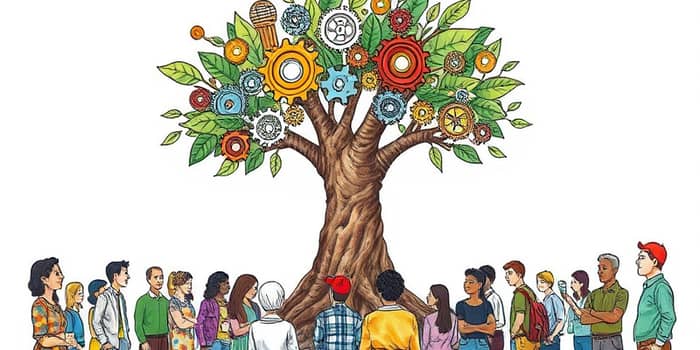
As the global economy evolves, businesses are called to rethink their purpose. The transition from a focus solely on shareholders to embracing every stakeholder reflects a profound transformation in corporate ethos.
At its core, the shareholder model prioritizes financial returns, such as dividends and stock appreciation. In contrast, the stakeholder model incorporates the needs of all parties affected by a company’s actions—including employees, customers, suppliers, communities, and governments.
Shareholders remain an essential group, but stakeholders represent a broader view of corporate accountability. This shift acknowledges that true business success depends on healthy communities, sustainable environments, and ethical operations.
The debate begins with two contrasting theories:
The stakeholder approach seeks to balance competing interests for lasting success, moving beyond short-term gains toward sustainable growth.
For decades, corporate governance emphasized shareholder primacy. Yet mounting social pressure, globalization, and environmental challenges fostered a new paradigm.
Key drivers of the shift include:
These factors converged to make ethical business practices and transparency central to contemporary corporate strategy.
In 2025, businesses deepen their commitment to sustainability and social impact.
Notable trends include:
Beyond budgets, corporations integrate sustainability into core operations—whether in supply chain transparency, water stewardship, or AI ethics.
Many now view stakeholder programs as essential to long-term business resilience, rather than optional brand-building exercises.
Transitioning from theory to practice involves several strategic actions:
By adopting integrating sustainability into supply chains and capital planning, firms can mitigate risks and seize new market opportunities.
Leading firms illustrate the power of stakeholder capitalism:
Unilever redefined its brand portfolio around sustainable living, cutting waste and carbon emissions while growing revenues.
Patagonia channels at least 1% of sales into environmental activism and encourages customers to repair rather than replace products.
Ben & Jerry’s embeds social missions in its supply chain, supporting fair trade and community development worldwide.
These examples show that stakeholder-focused strategies can drive both profit and purpose, boosting employee loyalty and customer trust.
Despite momentum, companies navigate hurdles:
Innovations in data analytics and unified reporting standards are emerging to address these concerns.
The shift toward stakeholder-driven business is poised to accelerate. Regulatory bodies, investors, and consumers increasingly demand holistic accountability.
Expect deeper integration of climate resilience, biodiversity protection, and equitable labor practices into corporate strategy. Advances in impact measurement will help quantify benefits, further validating stakeholder programs.
Companies that embrace these changes will likely outpace peers in innovation, reputation, and financial performance.
The journey from shareholder primacy to stakeholder engagement represents a fundamental reimagining of corporate purpose. By broadening economic responsibility, businesses can foster resilient communities, protect the planet, and secure long-term prosperity.
In a world facing complex social and environmental challenges, adopting stakeholder capitalism is not just an ethical choice—it’s a strategic imperative.
References