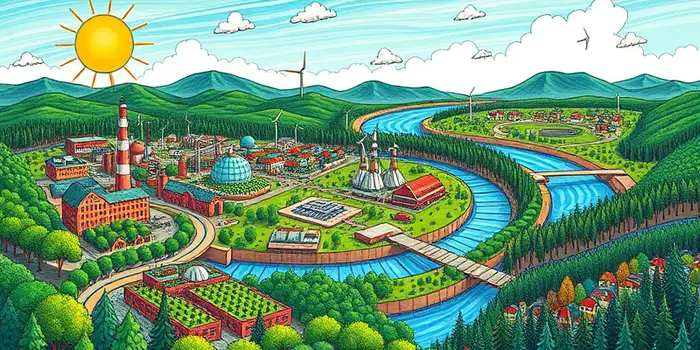
For centuries, economies have followed a take-make-dispose model that prizes rapid growth over planetary health. As resource depletion accelerates and financial systems strain, a new blueprint is essential. This article explores how shifting from extraction to creation can reshape our world and offers concrete steps to finance this transition toward a truly circularly-connected resource value chains economy.
Since the Industrial Revolution, prevailing economic thought has equated progress with escalating output and consumption. Under this paradigm, natural resources are treated as inexhaustible inputs, fueling expansion without regard for long-term consequences. The result has been widespread environmental degradation, biodiversity loss, and social inequities as costs are offloaded onto communities and ecosystems.
By externalizing these costs, extractive models have created an illusion of wealth while undermining the very foundations that support future growth. The inertia of entrenched systems makes transformation challenging but not impossible.
Global markets are showing signs of stress. Soil fertility is declining under unsustainable agriculture, while freshwater scarcity threatens food security. Fossil fuel dependence drives climate volatility, and price spikes in critical minerals trigger geopolitical tensions. Financial speculation on commodities only amplifies these risks, making food and energy less accessible to vulnerable populations.
Such fragility highlights the urgent need to minimize waste and maximize resource productivity. Building resilience requires rethinking how capital is allocated, insisting on long-term returns that factor in ecological and social well-being.
To navigate this shift, it is crucial to differentiate between activities that generate genuine value and those that merely redistribute existing wealth. Mainstream metrics like GDP fail to make this distinction, rewarding rent-seeking and speculative gains over real innovation and social progress.
By reframing investments toward productive outcomes, societies can ensure that capital fuels sustainable growth rather than draining shared wealth.
Redirecting financial flows from extractive ventures to value-creating projects is paramount. This involves redefining risk assessments, incentivizing long-horizon investments, and developing new instruments that align with regenerative goals. Key mechanisms include:
Such tools can help channel trillions of dollars into renewable energy, circular manufacturing, and social infrastructure, laying the groundwork for inclusive prosperity.
The circular economy emphasizes reuse, repair, remanufacturing, and recycling as core design principles. Companies redesign products for longevity, shifting value from extraction to stewardship. Regenerative approaches go further, actively restoring ecosystems and nurturing human capital, creating a symbiotic cycle between nature and economy.
The sharing economy leverages technology to optimize asset utilization, cutting costs and ecological footprints while enhancing access for underserved populations.
Contrary to prevailing narratives, history shows that governments have catalyzed transformative innovations. Through targeted research funding, procurement guarantees, and equity stakes, the state can catalyze breakthrough technological advances and create new markets. DARPA’s role in birthing the internet and public investments in gene editing exemplify how government-led investment drives innovation.
By embracing an entrepreneurial state model, policymakers can steer capital toward higher-risk, higher-reward ventures that the private sector might overlook, ensuring that public benefits are fairly distributed.
Resilient communities invest in internal capacities, from worker cooperatives to local food systems. Regenerative economies are built on dense networks of collaboration, where information and resources circulate within a region, strengthening social cohesion and adaptive capacity.
In contrast, through-flow systems feed profits outward and import results, leaving little legacy of local development. To avoid this pitfall, financing mechanisms must include:
Realigning policy requires robust metrics that account for environmental health, social equity, and long-term resilience. Beyond GDP, indicators like the Genuine Progress Indicator (GPI), Human Development Index (HDI), and ecological footprint must inform decision-making.
Adopting a science-based planetary boundaries concept ensures that economic activity remains within safe ecological thresholds. Fiscal policies can incorporate carbon pricing, resource taxes, and dividend mechanisms to redistribute wealth generated from common assets.
At the heart of these reforms is the principle that finance should serve society, not the reverse. By establishing transparent rating systems for investments and holding institutions accountable for environmental and social outcomes, we can recalibrate incentives toward real value creation.
The transition from extraction to creation demands coordinated efforts across sectors and scales. Financial institutions, corporations, governments, and citizens each hold a piece of the puzzle. By embracing redirected financial flows toward development, elevating the public sector’s catalytic role, and embedding circular and regenerative principles, we can forge a resilient economic paradigm.
This journey challenges established power dynamics and requires unwavering commitment to equity and sustainability. Yet, the rewards—a stable climate, thriving communities, and shared prosperity—are well worth the effort. Let us finance the future we want: a world where creation triumphs over extraction, and economic vitality is measured not by raw output, but by the flourishing of people and planet.
References