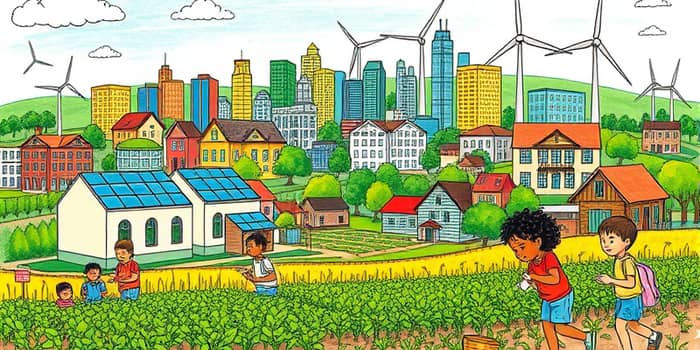
The Sustainable Development Goals (SDGs) represent a universal call to action by the United Nations to eradicate poverty, protect the planet, and ensure peace and prosperity for all. Despite the clear vision, actualizing these goals requires mobilizing unprecedented financial resources and tailoring global strategies to the tapestry of local contexts. Across continents, cities, towns, and villages, communities yearn for transformative change—but they face a colossal barrier: an acute shortage of funding.
Today, the annual global financing deficit for the SDGs is estimated at over $4 trillion. In 2015, the gap stood around $2.5 trillion; by 2024, it soared to $4.2 trillion, driven by climate shocks, conflicts, and economic disruptions. While global wealth exceeds $450 trillion, only a sliver is channeled into sustainable development. Emerging economies bear the brunt: constrained by high debt, limited fiscal space, and steep borrowing costs, many nations struggle to fund essential projects in health, education, clean energy, and urban infrastructure.
Between 2015 and 2022, resources for sustainable development grew by a mere 22%, while needs surged by 36%. Public debt reached a record $102 trillion in 2024, further crowding out budgets for social services. The imbalance is stark: urgent global challenges collide with under-resourced systems. Yet this stark reality also ignites innovation—pushing public and private actors to reimagine financing frameworks.
Solutions are emerging. The United Nations Development Programme (UNDP) spearheaded efforts that mobilized nearly $870 billion in SDG-aligned investments between 2022 and 2024, achieving an impressive 60-to-1 leverage ratio. The ambition is clear: channel $1 trillion annually by 2025. Simultaneously, sustainable debt issuance surpassed $1 trillion for the fifth consecutive year in 2024, signaling investor appetite for green and social bonds.
Blended finance—strategically combining public grants with private capital—has proven transformative. Tools like SDG Investor Maps and Impact Standards guide institutional investors toward projects that yield both financial returns and social impact. Multilateral Development Banks (MDBs) continue to play a critical role; calls to triple their lending capacity underscore the urgency. Complementing these are Integrated National Financing Frameworks (INFFs), adopted by 86 countries, which integrate budgets, regulatory reforms, and private partnerships to align national policies with SDG priorities.
More than two-thirds of the global population resides in urban areas, making local governments pivotal in achieving SDG outcomes. Localization bridges global ambitions with community realities. By translating broad targets into context-specific policies, municipalities can focus on the most pressing needs—be it affordable housing, reliable public transport, or waste management. Local data collection and participatory planning ensure that strategies resonate with residents.
Communities, when empowered, become engines of sustainable change. Grassroots initiatives—ranging from municipal food security programs to neighborhood tree-planting campaigns—demonstrate the power of collective action. Partnerships with non-profits, universities, and businesses multiply impact, weaving a network of shared responsibility that uplifts vulnerable populations.
Effective implementation hinges on robust data. Yet funding for SDG monitoring systems remains fragile. In 2022, nine donors provided 70% of support for global SDG data, exposing an alarming concentration risk. When funders withdraw—such as USAID’s recent exit from key demographic surveys—monitoring infrastructure can collapse, undermining accountability and progress tracking.
Building resilient national statistical systems is imperative. Country-led data platforms, backed by diversified funding, can sustain ongoing analysis of poverty rates, gender gaps, and environmental indicators. Investments in digital tools, open-data initiatives, and capacity building ensure that decision-makers at all levels can respond in real time to emerging challenges.
Around the world, cities and regions are showcasing inspiring examples of SDG localization:
These stories underscore a central truth: innovation flourishes when local actors are equipped with resources, data, and autonomy. Even in contexts of fragility, participatory governance and transparent budgeting can yield transformative outcomes.
To close the financing gap and catalyze local impact, stakeholders must unite behind strategic reforms:
Mobilizing trillions in resources is daunting, but the cost of inaction is far greater. From the rising seas threatening coastal cities to persistent inequality in rural districts, challenges mount daily. Yet everywhere, champions of change—government officials, social entrepreneurs, and community volunteers—are lighting the way.
Financing the SDGs demands a paradigm shift: from top-down targets to collaborative, locally driven solutions funded by innovative partnerships. As global citizens, our collective will and creativity can unlock the capital needed to build resilient, inclusive communities. The time to act is now—to ensure that the promise of the SDGs resonates in every neighborhood, shaping a future where no one is left behind.
References