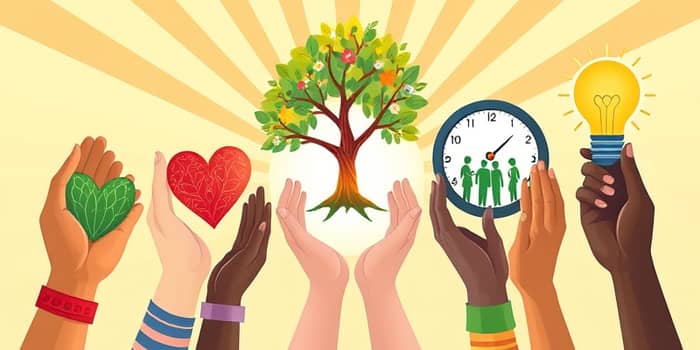
Abundance is often reduced to bank balances and investments, but true fulfillment extends far beyond material assets.
Most people equate wealth with dollars, yet abundance is a multifaceted concept. By adopting an abundance mindset rooted in possibility, individuals recognize opportunities in every domain of life.
This perspective shifts focus from competition to contribution, fostering collaboration, creativity, and continual growth.
While financial capital plays a role, lasting abundance emerges from multiple dimensions of well-being. The table below outlines eight key types of wealth.
These dimensions interact to produce lasting satisfaction. Recognizing each area allows us to cultivate a balanced life.
A fundamental divide exists between a scarcity mindset and an abundance mindset. Under scarcity, fear and competition dominate; under abundance, gratitude and generosity prevail.
Neuroscience reveals that daily gratitude reshapes the brain by reinforcing reward pathways. As individuals focus on what they have, their perception of possibility expands.
Communities around the world demonstrate value beyond currency. Time banks, gift economies, and open-source collaborations generate significant benefits.
Platforms like Wikipedia and open-source software projects illustrate how platforms enable community-based value exchange that spans continents.
Transforming an abundance mindset into daily habits requires simple but consistent action.
By weaving these practices into routines, individuals build resilience, joy, and lasting fulfillment.
True abundance depends on the health of our planet. Natural resources like sunlight and fresh water represent gifts that require stewardship.
Circular economy models emphasize closed loops preventing waste by repurposing materials, reducing consumption, and extending product lifecycles.
Communities can generate abundance through local renewable energy, shared gardens, and conservation efforts that respect ecological boundaries.
Research in positive psychology highlights that income beyond a certain point yields diminishing happiness. Studies suggest that, once basic needs are met, factors like social relationships and health contribute more to well-being.
In the United States, households earning above $75,000 per year report similar life satisfaction scores to those earning substantially more, illustrating that feelings of satisfaction and abundance derive from beyond financial gain.
Philosophers from Socrates to modern thinkers remind us, “there’s no price tag on the richness of your experiences.” Concepts like Ubuntu in African cultures emphasize communal bonds over individual accumulation.
Positive psychology identifies connection, meaning, and personal growth as stronger life satisfaction predictors than wealth alone. Cultural rituals and shared practices nurture collective abundance.
Cultivating abundance beyond monetary gain invites a holistic transformation of values and behaviors. By embracing diverse dimensions—health, relationships, purpose, and creativity—individuals craft lives of profound richness.
True prosperity emerges when we trust that there are more than enough resources for every member of our global community. Through intentional habits, collaborative models, and sustainable practices, we can build a world defined by possibility, generosity, and flourishing.
References