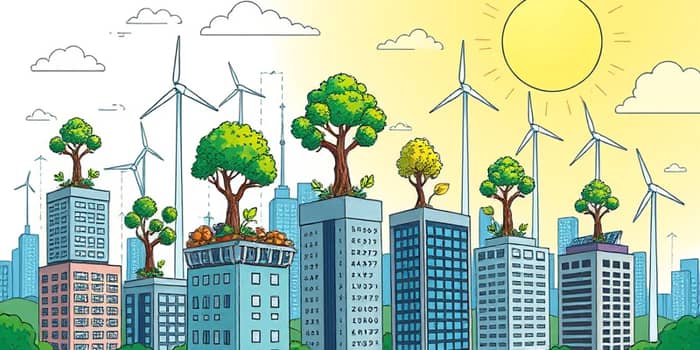
In late 2025, the power of capital to shape a more equitable and sustainable future has never been more evident. By channeling resources into innovative sectors and embedding social impact into every decision, investors across the globe are becoming architects of positive change.
From bustling metropolises to emerging rural communities, every allocation of funds carries the potential to transform lives, support ecosystems, and secure resilient economies. This article explores how strategic investments—large and small—are driving progress, detailing trends, sectoral highlights, and practical guidance for those ready to join the movement.
After a slight contraction in 2024, with global foreign direct investment flows totaling $1.5 trillion, the outlook for 2025 is optimistic. Analysts project a 4.9% rebound as geopolitical tensions ease and supply chains stabilize. The Asia-Pacific region, notably China and India, is positioned to attract over 35% of global FDI, propelled by manufacturing, technology, and infrastructure projects.
Africa and other emerging economies are capturing fresh attention, particularly in fintech, renewable energy, and transportation networks. India is on track to become the world’s fastest-growing major economy, fueled by large-scale projects in technology and urban development.
Institutional and private investors alike are diversifying portfolios with a dual focus on sustainability and returns. Private equity “dry powder” stands at $418 billion, ready to fuel ventures in climate tech, health tech, and digital platforms.
Over the past decade, sustainable, responsible, and impact investing has moved from niche to mainstream. ESG-focused assets under management are set to hit $33.9 trillion by 2026, representing more than 20% of all global AUM. Impact investing alone has grown at 21% annually, demonstrating that financial returns and social outcomes can go hand in hand.
Consumer and investor attitudes are reinforcing this shift: 89% of investors now consider ESG factors, and 83% of global consumers expect companies to champion best practices in environmental and social governance. Meanwhile, community development financial institutions have seen their assets expand by 615% since 2014, reaching $458 billion, channeling capital into microfinance, affordable housing, and clean energy.
The allocation of capital across industries reveals where investors see the greatest potential for impact and growth.
Investing with purpose presents unique opportunities, but it also demands vigilance. Diversification into high-growth sectors and regions can enhance long-term returns, yet entails geopolitical and currency risks. Integrating advanced data analytics and impact measurement tools strengthens decision-making and boosts accountability.
The United Nations’ Sustainable Development Goals provide a clear roadmap for impact-focused capital. Investments aligned with SDG 7 (affordable clean energy), SDG 13 (climate action), and SDG 11 (sustainable cities) deliver measurable benefits to society and the environment.
Forward-thinking investors are advocating for systemic financial models—shifting from isolated projects to country-led transition plans that integrate nature restoration, resilient infrastructure, and social equity.
Whether you manage institutional assets or smaller personal portfolios, there are concrete steps to ensure each dollar contributes to building a better world:
By following these guidelines, investors can harness the full power of capital to generate lasting benefits. Each allocation becomes an expression of values, a vote cast for cleaner energy, healthier communities, and resilient economies.
In the interconnected world of 2025, every investment decision sends ripples across society and the planet. By prioritizing sustainability, innovation, and inclusivity, we can ensure those ripples become waves of positive change.
From global institutional mandates to individual contributions, the collective force of capital is reshaping our shared future. Let us embrace this opportunity—building a better world, one investment at a time.
References